
Best Time of Year to Fish Lewis Smith Lake
March 1, 2024
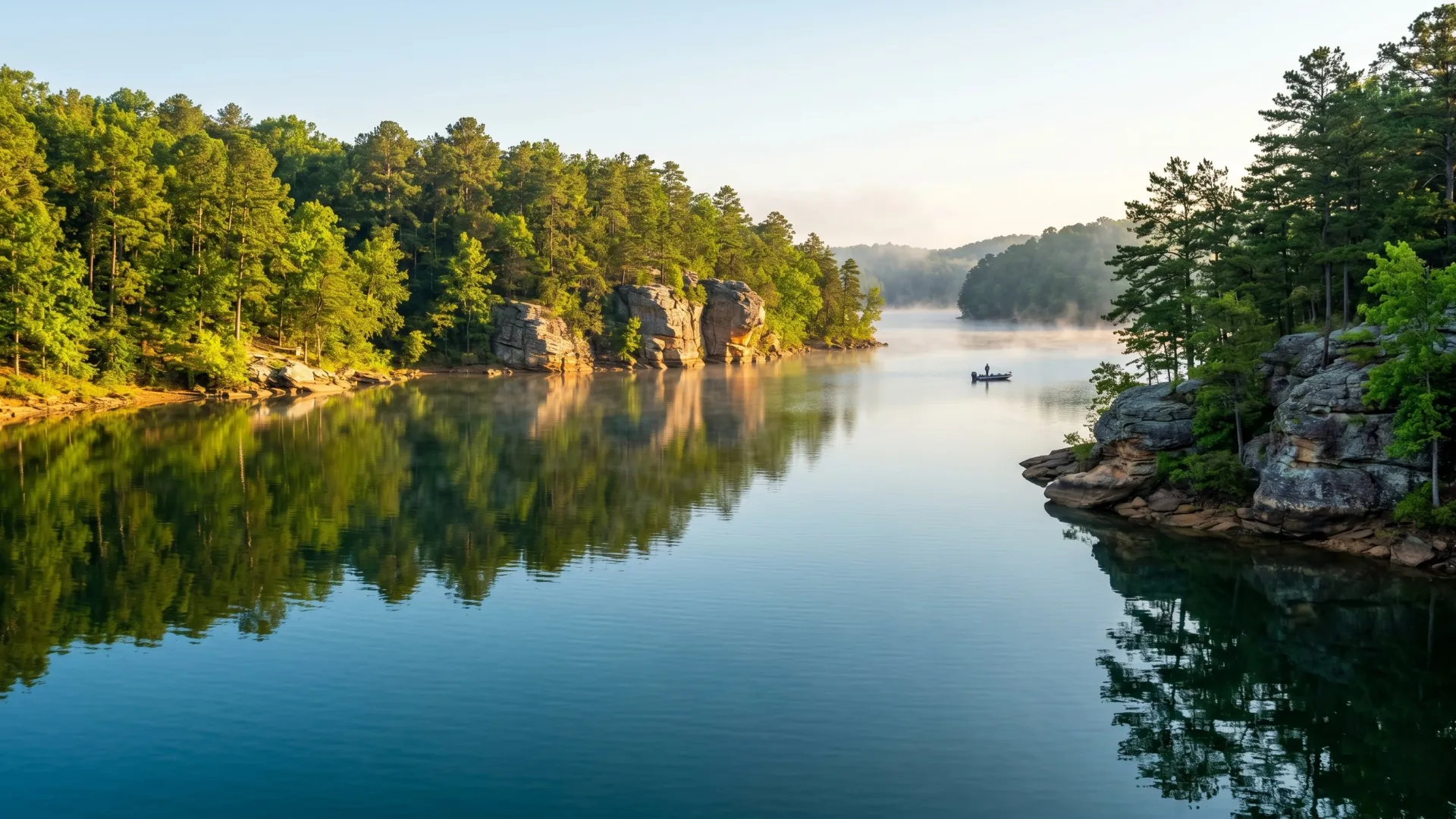
Lewis Smith Lake fishes well in every season — but it doesn't fish the same way in every season. The lake's deep, clear water creates distinct seasonal patterns that differ meaningfully from what you'd expect at a shallower, murkier reservoir.
Spring: The Prime Season (March–May)
Spring is when Smith Lake is at its most generous. As water temperatures climb from the upper 40s into the mid-60s, spotted bass transition through a predictable prespawn, spawn, and post-spawn pattern that makes them highly catchable.
March brings prespawn spotted bass onto the points and transition banks adjacent to spawning flats. Fish are feeding aggressively before the spawn and are catchable on drop shots, shaky heads, and swimbaits in the 8–20 foot range. Finesse gear in 6–8 lb fluorocarbon is the right tool.
April is spawn month at Smith Lake, with fish moving into 2–6 feet over gravel and rocky substrate. This is the most accessible spotted bass fishing of the year.
Simultaneously, crappie fill every shallow cove and dock during the spring spawn. A 1/16 oz jig or live minnow under a float in 2–4 feet of water near structure produces consistent action.
Summer: Go Deep, Go Early (June–August)
Summer at Smith Lake is about adaptation. When surface temperatures push into the mid-80s, the fish go deep — spotted bass to 25–40 feet on main lake structure, stripers following shad in the main channel. The best summer fishing happens between first light and about 10am. By midday, go vertical. Drop shot rigs worked slowly over ledges in 25–40 feet produce spotted bass throughout the summer.
Fall: The Exciting Season (September–November)
Fall at Smith Lake produces some of the most exciting fishing moments in freshwater. As water cools, spotted bass go on a feeding binge, and stripers herd shad into creek arms in spectacular surface blowups. Topwater fishing from September through early November is as good as it gets. Striper blowups in October and November are the signature experience of Smith Lake fall fishing.
Winter: Slow Down and Go Deep (December–February)
Winter gets overlooked by a lot of anglers, but it rewards those who know where to go. Striper jigging in the deepest part of the main channel — 40–80 feet near the dam — produces the trophy fish that make Smith Lake famous. Spotted bass in winter concentrate on main lake ledges in 20–35 feet. January and February routinely produce 4-to-5-pound spotted bass.
If your trips to Smith Lake have you thinking about making it permanent, local expert Justin Dyar at justindyar.com has helped hundreds of families do exactly that.