
Spotted Bass Fishing at Lewis Smith Lake
The signature fish of Smith Lake — finicky, hard-fighting, and absolutely made for clear, deep water.
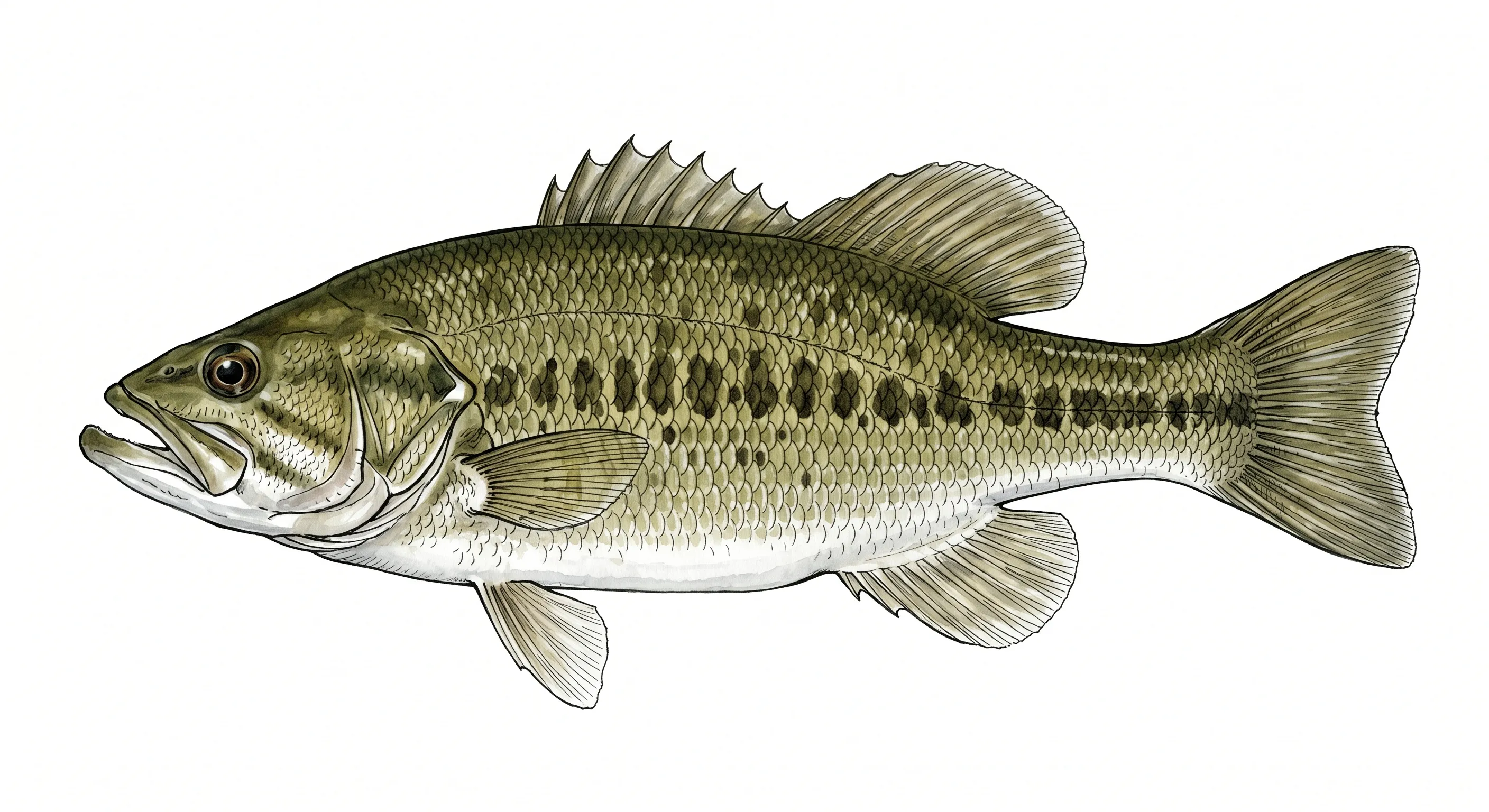
About Spotted Bass at Smith Lake
Spotted bass are the defining species of Lewis Smith Lake. While largemouth bass dominate most Alabama impoundments, Smith Lake's clear, cold, deep water is precisely the habitat where spotted bass thrive. They're a different fish from largemouth in almost every way — they school more tightly, suspend more readily in open water, feed more aggressively on shad, and require a more finesse-oriented approach due to Smith Lake's exceptional water clarity.
Smith Lake spotted bass routinely reach 3 to 4 pounds, and fish over 5 pounds are caught every year. The lake's deep, clear water and abundant shad forage have created a population of well-conditioned fish. Tournament results consistently show Smith Lake's spotted bass punching above their weight class compared to other Alabama lakes.
Best Time of Year
Spring (March–May) is the prime season. Prespawn spotted bass are aggressive and shallow, feeding heavily on the rocky points and transition banks that connect deep water to spawning flats. When water temperature reaches 60–65°F, fish begin staging on points in 8–15 feet. Full spawn occurs around 65–70°F, when fish move into 2–6 feet over gravel and rock. Post-spawn fish recover quickly and begin feeding again.
Fall (September–November) is the second peak. As surface temps drop, spotted bass come off their summer deep-water haunts and begin feeding aggressively on shad in creek arms and on main lake points. Topwater fishing can be sensational in October — schooling spotted bass chasing shad on the surface are one of the more exciting sights in freshwater fishing.
Summer bass go deep — typically 20–40 feet on main lake structure — and require vertical presentations or deep-running lures. Early morning and late evening can produce topwater action before the heat sets in.
Winter spotted bass concentrate on main lake ledges and points in 20–35 feet. Finesse presentations worked slowly produce fish, and the biggest fish of the year are often caught in January and February.
Best Spots for Spotted Bass
- Main lake points — Any point that transitions from shallow rock into deep water holds spotted bass year-round.
- Brushy Creek arm — This arm has excellent spotted bass habitat with clear water and defined structure.
- The dam area — Deep water near the dam holds big spotted bass in summer and winter.
- Submerged timber — Old creek channels with standing timber are prime spotted bass habitat, especially in 15–30 feet.
- Rocky bluffs — Steep bluff walls with deep water adjacent are classic spotted bass locations in any season.
Recommended Tackle & Lures
The clear water demands finesse — light fluorocarbon line and natural color presentations outperform flashy baits on most days. Most experienced Smith Lake anglers use 6-to-8-pound fluorocarbon for the majority of their spotted bass fishing.
Finesse Tackle (Primary)
- Drop shot rig — The single most reliable technique on Smith Lake. Use a small straight-tail worm or minnow-style bait on 6–8 lb fluorocarbon. Works at any depth, any season. View on Amazon →
- Shaky head jig — A finesse jig with a straight-tail worm is a Smith Lake staple. Work it slowly along bottom on points and ledges. View on Amazon →
- Ned rig — A short mushroom head jig with a buoyant soft bait works exceptionally well in summer's deep clear water. View on Amazon →
- Small swimbait — A 3.5-inch paddle tail swimbait on a 3/16 oz head catches spotted bass all year at Smith Lake. View on Amazon →
Reaction Baits (Productive in Season)
- Topwater poppers/walkers — In fall when fish are schooling on the surface, a walking bait or popper draws savage strikes. View on Amazon →
- Jerkbait — In cold water (below 55°F), a suspending jerkbait worked with long pauses can be deadly. View on Amazon →
Fishing Tips
- Use fluorocarbon leader material — spotted bass at Smith Lake are line-shy
- Match your bait size to the primary forage: blueback herring and threadfin shad
- Pay attention to wind-blown points — current concentrates fish
- When you find schooling fish, circle back after letting them calm down; they'll regroup
- Use a Spot Lock trolling motor or drift socks to stay on structure in wind
Sources & References
Frequently Asked Questions
What is the world record for spotted bass?
The Alabama state record spotted bass weighed 8 lbs 15 oz, caught at Lewis Smith Lake in 2022. The IGFA world record for spotted bass stands at 10 lbs 4 oz, making Smith Lake one of the premier trophy spotted bass destinations in the country.
How do you identify a spotted bass vs a largemouth?
The easiest identification feature is the jaw line — a largemouth's upper jaw extends past the eye, while a spotted bass's jaw stops below or just at the back of the eye. Spotted bass also have a small rough patch of teeth on the tongue, a more defined lateral line of diamond-shaped spots, and a connected dorsal fin with no deep notch.
How deep are spotted bass in summer at Smith Lake?
During midsummer heat, spotted bass at Smith Lake typically suspend or hold on structure at 20 to 40 feet deep. The thermocline usually sets up at around 25 to 35 feet, and fish stack just above it. Drop shot rigs and deep-diving crankbaits worked along main lake points and ledges at these depths produce consistently in July and August.
What is the size limit for spotted bass in Alabama?
Alabama has no statewide minimum size limit for spotted bass and a daily bag limit of 10 fish (combined with other black bass species). Always verify current regulations at outdooralabama.com before your trip, as special regulations can apply to specific bodies of water.