
Crappie Fishing at Lewis Smith Lake
A family-friendly fishery that produces excellent eating — and sensational action in the right season.
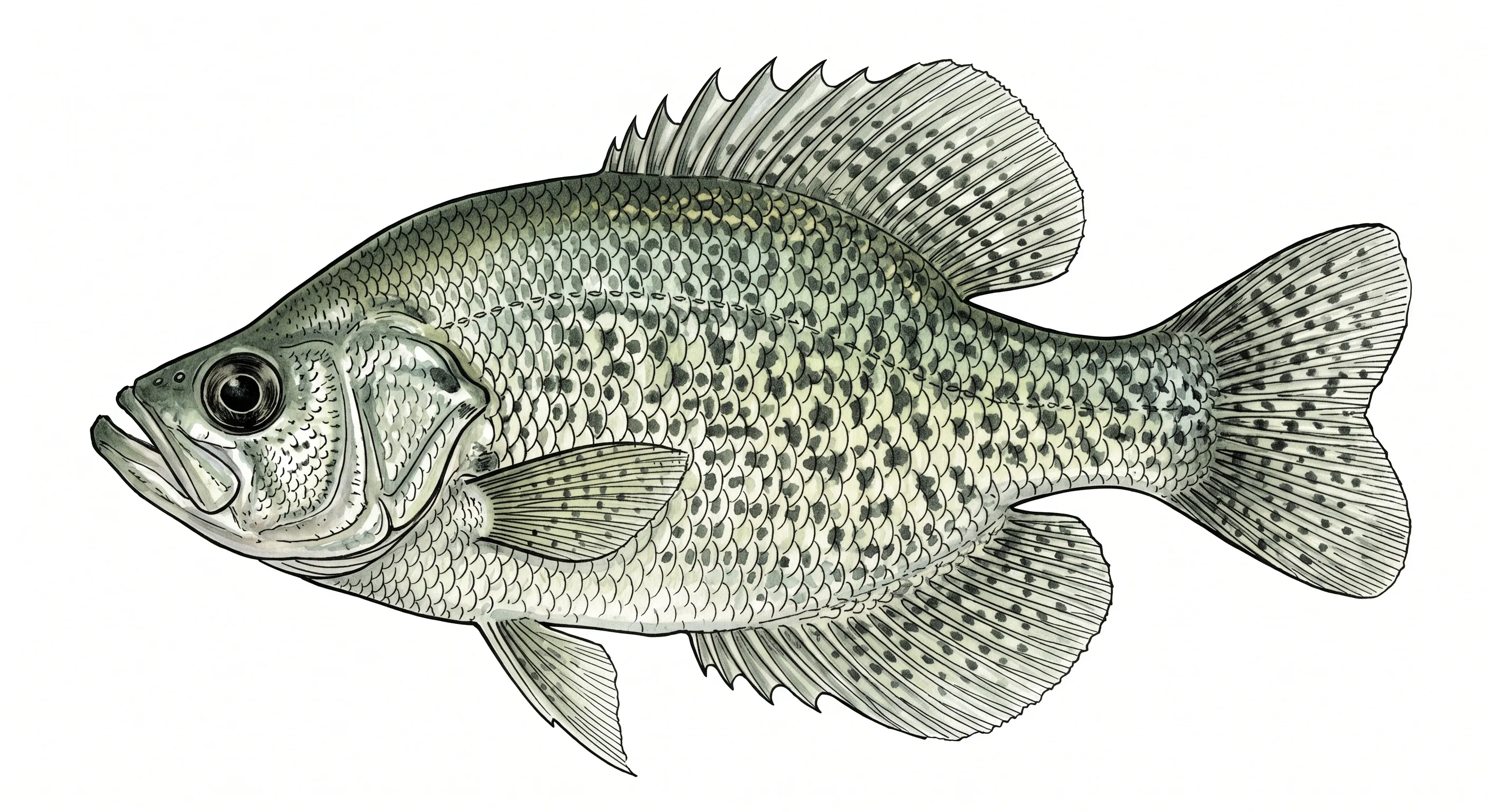
Crappie at Smith Lake
Both black crappie and white crappie are found throughout Lewis Smith Lake, with black crappie being more common in the clearer, deeper water that characterizes much of the lake. Crappie at Smith Lake are a bit harder to pattern than on more traditional shallow, murky impoundments — the clear water means they can see well and are less tolerant of heavy line and unnatural presentations. But when you find them during the right season, the action can be extraordinary.
Smith Lake crappie tend to run slightly smaller on average than fish from lakes like Weiss or Lay, but the clarity of the water makes them more challenging and arguably more rewarding to catch. A 12-inch crappie from Smith Lake will fight harder than you expect because it can see the boat and react accordingly.
Best Time of Year for Crappie
Spring (March–April) is by far the best time to target crappie at Smith Lake. As water temperatures reach 58–65°F, crappie move from their winter deep-water haunts into the shallows to spawn. They'll stack up in brushy coves, around docks, and near any structure in 2–8 feet of water. This is when dock fishing for crappie is at its absolute best.
Fall (October–November) provides a secondary feeding period as crappie fatten up before winter. They move back toward shallow water and creek arms and can be caught on jigs and minnows.
Winter crappie move deep — typically 20–35 feet — and suspend over submerged structure or timber. They're catchable on vertical jig presentations, but it requires patience and precise placement.
Best Spots for Crappie
- Brushy coves — Any cove with brushy banks and shallow flats becomes crappie heaven in March and April.
- Boat docks — Docks with deep water nearby are classic crappie habitat. Many lakefront homeowners sink brush piles near their docks specifically to hold crappie.
- Submerged timber — Old standing trees in 8–15 feet of water hold crappie throughout the year.
- Brushy Creek coves — The upper reaches of Brushy Creek and similar tributary arms produce excellent spring crappie.
- Bridge pilings — Bridge structure creates crappie habitat wherever the lake crosses a road.
Recommended Tackle & Lures
- Tube jig (1/16–1/8 oz) — The workhorse crappie lure at Smith Lake. White, chartreuse, and pink are reliable colors. View on Amazon →
- Curly tail jig — A small curly tail grub on a light jig head works all year. View on Amazon →
- Live minnow under a bobber — Nothing outfishes live minnows for crappie during the spawn. Use a small hook (size 4–6), light line, and present the minnow 2–4 feet under a slip float. View on Amazon →
- Crappie nibbles — Soft plastic crappie-specific baits in white or chartreuse work well when live bait isn't available. View on Amazon →
Line and Gear
Use 4-to-6-pound monofilament or fluorocarbon for crappie at Smith Lake. The clear water is unforgiving with heavier line. A light or ultralight spinning rod in the 5.5-to-6.5-foot range gives good feel for small jig fishing. Many experienced Smith Lake crappie anglers use a long, limber "crappie rod" — 10-to-12-foot jig poles — for dock flipping.
Cleaning and Eating
Crappie are exceptional table fare — widely considered one of the best-tasting freshwater fish in North America. Smith Lake crappie have a clean, mild flavor because of the clear, cold water. A fish fry with fresh-caught crappie, hush puppies, and coleslaw is a Smith Lake tradition that never gets old.
Sources & References
Frequently Asked Questions
When is the best time to fish for crappie at Smith Lake?
The spring spawn (March through early May) is the prime crappie season at Smith Lake. Fish move into shallow coves and creek arms to nest when water temperatures reach 58 to 65°F, making them easy to target at 2 to 8 feet deep around brush, dock pilings, and wood. Fall (September–October) offers a secondary bite as fish fatten up on shad before winter.
What jig size works best for Smith Lake crappie?
Due to Smith Lake's clear water, lighter jigs in the 1/16 to 1/8 oz range on 4 to 6-pound test line are standard. Tube jigs and curly-tail grubs in natural shad colors (white, silver, chartreuse) or pink/chartreuse combinations produce year-round. Live minnows suspended under a slip float are the most consistent approach for beginners during the spawn.
Where do crappie spawn at Smith Lake?
Spawning crappie concentrate in the upper ends of creek arms and coves throughout all three arms of Smith Lake. The north arm (Brushy Creek area) and coves off the Winston County side near Arley are locally known for strong crappie populations. Target areas with submerged timber, rock piles, laydown logs, and dock pilings in 3 to 10 feet of water during the spawn.